
EIGER
Bernese Alps · Bernese Oberland · Bern
3'967 m · 13'015 ft
Switzerland
The Mountain
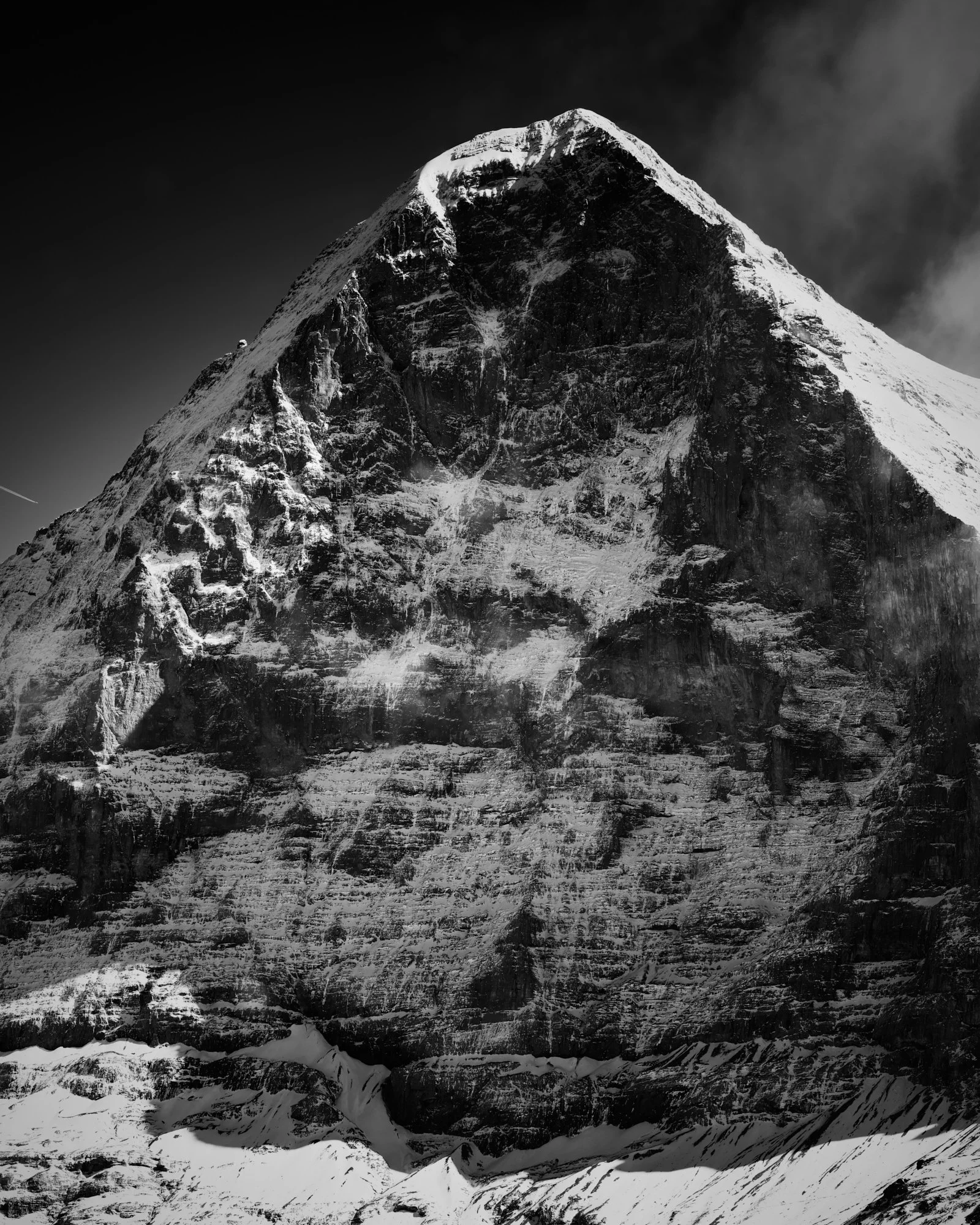
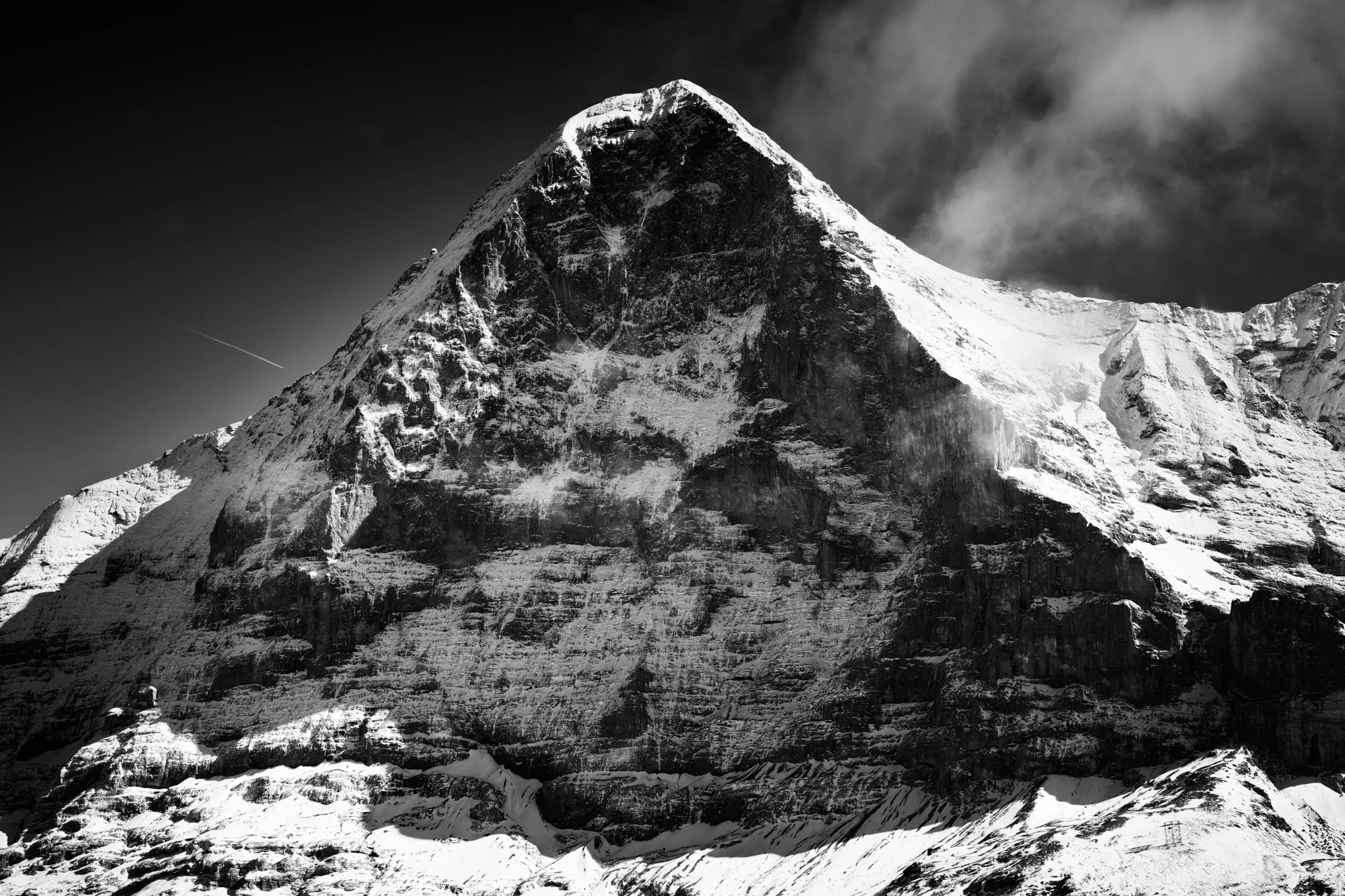
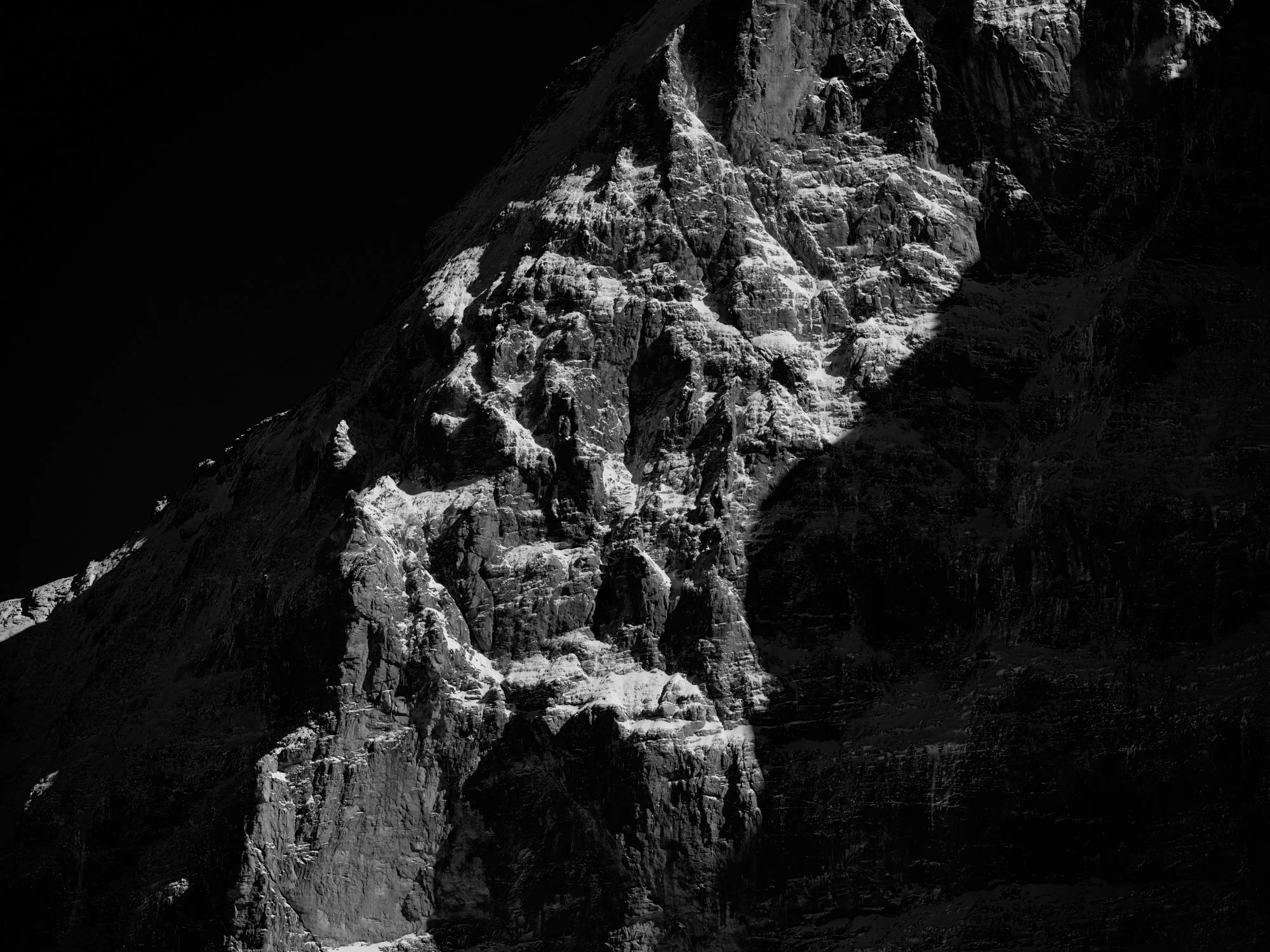
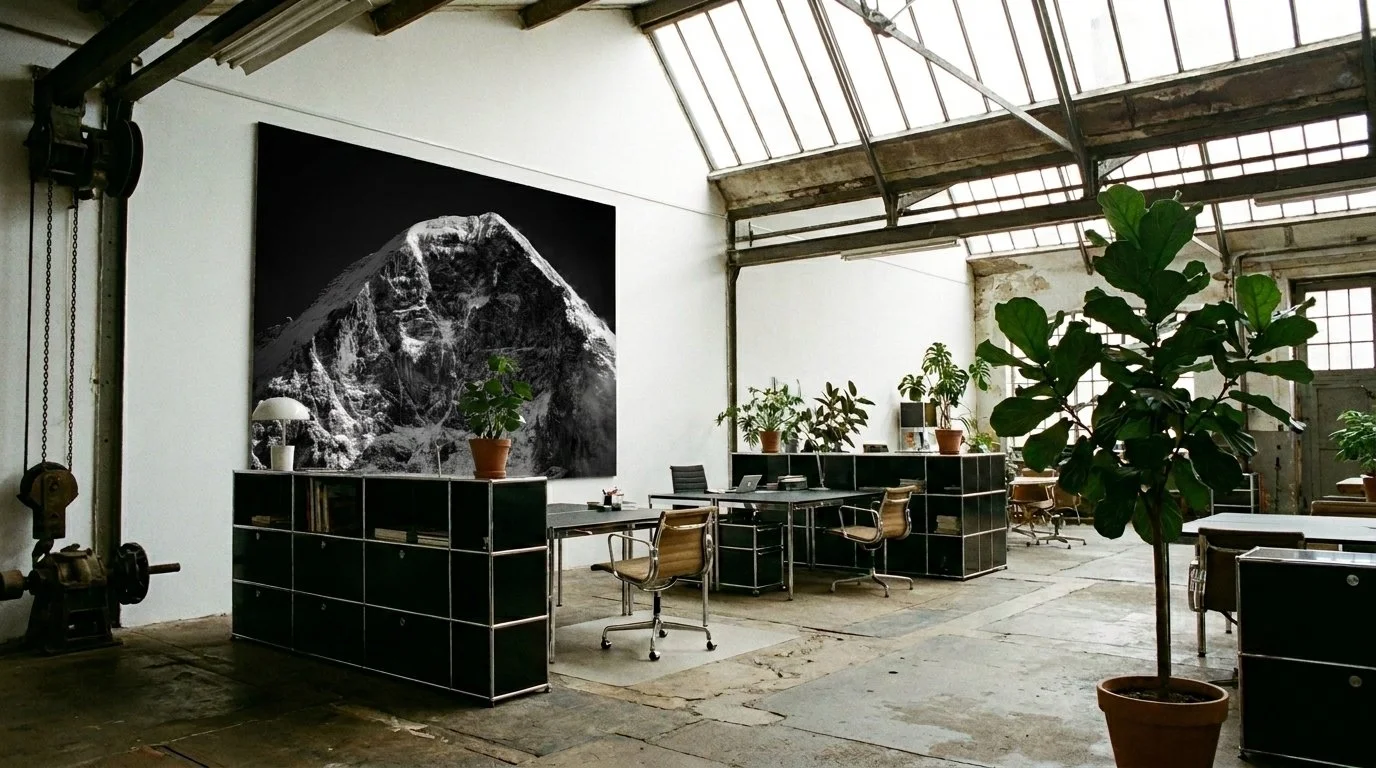
From Kleine Scheidegg the wall rises eighteen hundred metres in a single vertical lift, dark rock against bright sky, holding shadow when the rest of the Bernese Oberland has long since brightened. Few alpine faces have been climbed, written about, mourned, photographed, or filmed as often as this one. The Eiger has its own literature, its own cinema, its own vocabulary. The Hinterstoisser Traverse. The Death Bivouac. The White Spider. Each name carries a story of attempt, sometimes a story of loss. The mountain gives nothing easily, and what it gives stays in the eye long after the season has changed. To photograph the north face is to photograph a place that has already been seen by everyone who came before.
Inquire about a work from this peak
Pricing, availability, and installation guidance are shared in private correspondence. Each inquiry is answered personally by the artist's atelier.
The Wall that Defined Modern Alpinism
Where the wall stands
The Eiger sits at the western end of the Bernese Oberland's most famous trio of peaks, beside the Mönch (4'107 m) and the Jungfrau (4'158 m), forming the silhouette that stands behind every postcard view from the high pastures of Grindelwald. At 3'967 metres the Eiger is the lowest of the three but the most photographed and most written about, because of the wall that drops from its summit to the valley floor on the north side. From the foot of the wall to the top is approximately 1'800 vertical metres of rock and ice, one of the largest faces in the Alps. The wall has been called the Nordwand since the late nineteenth century, the Mordwand (Murder Wall) in the wake of the climbing fatalities of the 1930s, a pun the climbing community has carried for nearly a century.
The peak stands above the village of Grindelwald in the canton of Bern, framed to the south by the Lauterbrunnental and to the east by the Eigergletscher and the western ridge of the Mönch. The classic vantage is Kleine Scheidegg, a railway station and Belle Époque hotel cluster at 2'061 metres on the saddle between Grindelwald and Wengen. From Kleine Scheidegg the entire north face fills the southern horizon, level enough that it can be photographed without significant foreshortening. The Männlichen above Grindelwald, the First (also above Grindelwald), and the Schilthorn above Mürren give variant angles. The Jungfrau Railway, opened in stages between 1898 and 1912, runs through tunnels inside the Eiger and Mönch to terminate at the Jungfraujoch at 3'463 metres. The line and its surrounding landscape were inscribed as UNESCO World Heritage in 2001.
The architecture of the wall
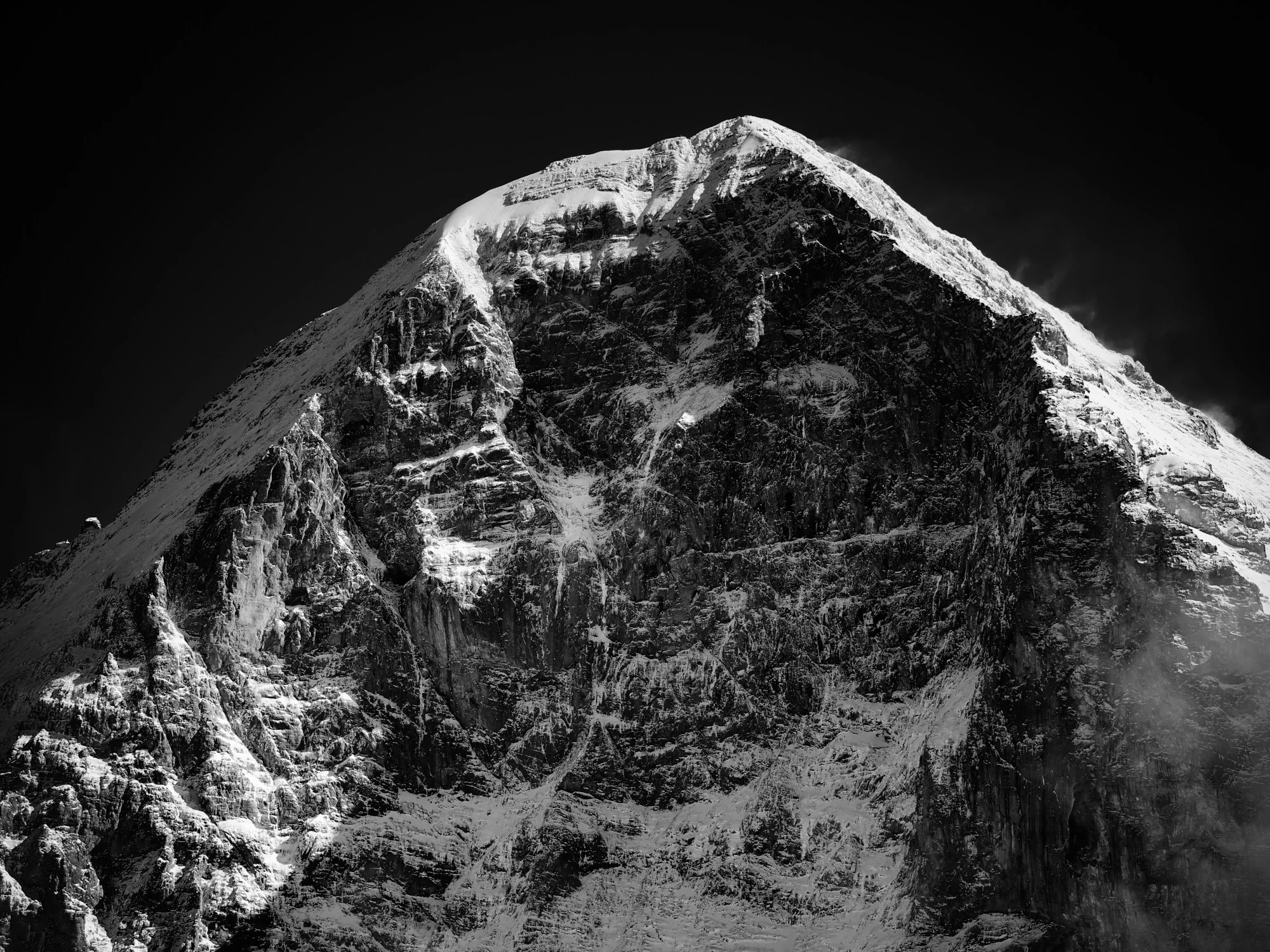
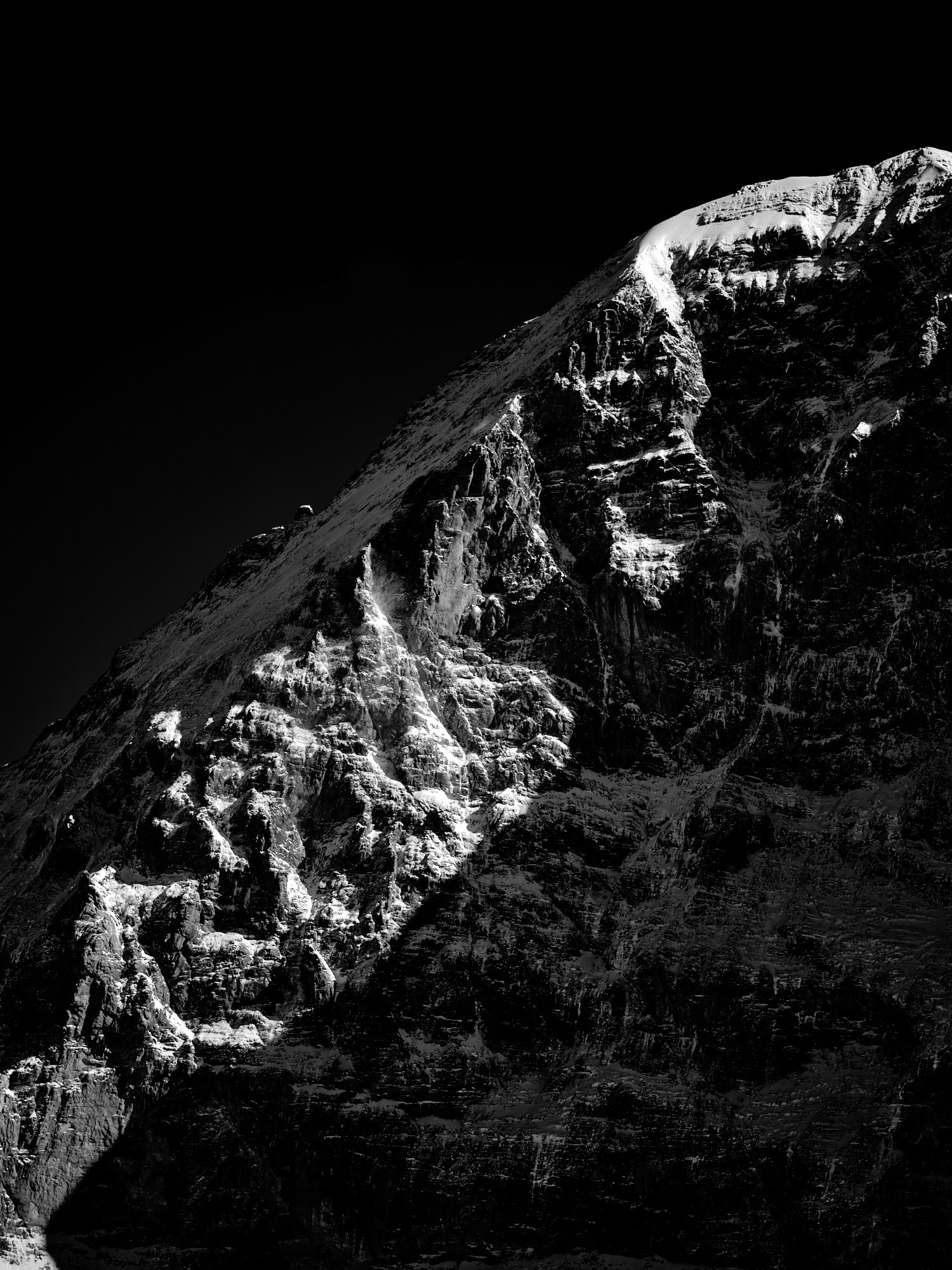
Few alpine faces hold their shape so consistently in memory. The Eiger Nordwand has named features the way old buildings have named rooms. The Hinterstoisser Traverse, a key passage low on the wall, named after Andreas Hinterstoisser who first crossed it in 1936. The Difficult Crack, the Ice Hose, the First Icefield, the Second Icefield, the Flatiron, the Death Bivouac (Todesbiwak), the Ramp, the Traverse of the Gods, and at the top of the wall, the White Spider, a snow field shaped like a spider that catches the eye from miles away. Each name belongs to a route through which thousands of climbers have now passed. Each carries a chapter of alpine literature.
The wall holds shadow far longer than the surrounding faces. Because it faces almost directly north and its base sits at the foot of a glacier basin, it is one of the last places in the Bernese Oberland to catch the morning sun and one of the first to lose it in the afternoon. In late autumn and through deep winter the wall can hold shadow most of the day, the rock dark against bright sky, snow and ice clinging to the upper third. In summer the lower wall warms enough to free climb on, but the upper sections rarely thaw. The mountain photographs differently in every condition. Fresh snow simplifies it into a single silver shape. Bare rock complicates it into a thousand visible lines. A passing storm reveals the architecture briefly and then closes again.
The west flank, the route Charles Barrington took in 1858, is comparatively gentle. Most photographs of the Eiger that hang in collectors' homes are of the north wall.
First ascent and the legend of the wall
The Eiger summit was first reached on 11 August 1858 by the Irish climber Charles Barrington with the Swiss guides Christian Almer and Peter Bohren. They went up the west flank, the easiest route to the summit, and descended the same day. Barrington had originally intended to climb the Matterhorn, but his finances did not allow the journey and he turned to the Eiger as a substitute, an irony that has not been lost on later writers. The ascent was the last of the great Bernese summits to fall.
The north face was a different matter. From the 1930s onward it became the most famous unclimbed objective in the Alps, attracting climbers from across Europe. Several attempts ended in tragedy. The most famous is the Toni Kurz tragedy of 1936. Toni Kurz, Andreas Hinterstoisser, Edi Rainer, and Willy Angerer attempted the wall in late July. Hinterstoisser made his namesake traverse, Rainer became seriously ill, the four were forced to retreat, and the way back was cut off because Hinterstoisser had pulled the rope after his traverse. All four died on the wall. Kurz's death, hanging on a rope just metres above his rescuers, was witnessed and recorded in detail. He has since become one of the most documented deaths in mountaineering history, his last words quoted in alpine literature for nearly a century.
The first successful ascent of the north face came two years later. Between 21 and 24 July 1938, the German climbers Anderl Heckmair and Ludwig Vörg, joined on the wall by the Austrian climbers Heinrich Harrer and Fritz Kasparek, completed the first ascent of the Nordwand over four days. Heckmair led the technical climbing on the upper wall. The four reached the summit on the afternoon of the fourth day in deteriorating weather. The climb ranks among the most celebrated in the history of European mountaineering.
Heinrich Harrer subsequently wrote Die weiße Spinne (The White Spider, 1959), the foundational literary account of the Eiger Nordwand, named after the spider shaped snowfield high on the wall. The book has been translated into more than twenty languages and remains the most cited mountaineering memoir of the twentieth century.
Painters, writers, and the Bergfilm legacy
The Eiger holds an unusually rich place in painting and cinema, even among Swiss alpine peaks.
Ferdinand Hodler (1853 to 1918) is the painter most closely associated with the Eiger and the Bernese Oberland. Hodler painted the Eiger, the Mönch, and the Jungfrau across his career, returning repeatedly to the same horizon line. His major works depicting the trio are held at the Kunstmuseum Bern, the Kunsthaus Zürich, and other Swiss institutional collections. Hodler's paintings established the Bernese Oberland trio as a single visual unit in the Symbolist canon, and his treatment of light on alpine ice influenced later landscape photographers including Werner Bischof.
The earlier Romantic painter Caspar Wolf (1735 to 1783) depicted the Bernese Oberland in his late works. Wolf's mountain pieces, now at the Aargauer Kunsthaus, predate the Eiger first ascent by nearly a century and document the wall before it had a climbing history.
In literature, beyond Harrer's Die weiße Spinne, the Eiger appears in Joe Simpson's The Beckoning Silence (2002), which centres on the Toni Kurz death and Simpson's own attempted ascent. The mountain features in Trevanian's 1972 novel The Eiger Sanction, which became Clint Eastwood's 1975 film of the same name, shot partly on location with substantial north face footage.
The most cinematically accomplished Eiger work is Philipp Stölzl's German feature film Nordwand (2008), which dramatises the 1936 Toni Kurz attempt. The film is widely regarded as the finest dramatisation of an Eiger ascent ever produced and is part of the broader Bergfilm lineage that includes Arnold Fanck's earlier work in the Bernina, including Die weiße Hölle vom Piz Palü (1929). The Bergfilm tradition treats the alpine north face as a stage for moral and physical extremity, and the Eiger has been its primary subject for nearly a century.
Glaciers, railway, and the visible record of change
The Eiger sits at the head of two of Switzerland's most documented glaciers, the Lower Grindelwald Glacier (Unterer Grindelwaldgletscher) and the Eiger Glacier (Eigergletscher). According to GLAMOS (Glacier Monitoring Switzerland), both glaciers have retreated significantly since the end of the Little Ice Age in 1850. The Lower Grindelwald Glacier has lost more than two kilometres in length since 1850 and is no longer visible from the village floor in the way it once was. The retreat is one of the most photographed and best documented glacial changes in the Alps and has been used as a reference case in IPCC literature.
The Jungfrau Railway is part of the cultural fabric of the peak. Opened in stages between 1898 and 1912, the line was an extraordinary engineering achievement of the late Belle Époque. It runs through tunnels inside the Eiger, with two intermediate stations, Eigerwand (no longer in regular use) and Eismeer (still active), where passengers can step out and look directly at the wall from windows cut into the rock. The line and its surrounding landscape were inscribed as UNESCO World Heritage in 2001 as part of the Swiss Alps Jungfrau Aletsch site, which also includes the Aletsch Glacier, the largest glacier in the Alps.
The Kleine Scheidegg hotel cluster at 2'061 metres has been a tourism waypoint since the line opened. The current Hotel Bellevue des Alpes and the Scheidegg-Hotels date from the late nineteenth century and are themselves significant pieces of Swiss tourism heritage. From Kleine Scheidegg every photograph of the Eiger Nordwand has the same fundamental geometry. Photographers have stood here for more than a hundred and twenty years and made effectively the same image, and in the differences between those images is the climate record of the Bernese Oberland.
Why the wall keeps being photographed
A peak with this much history and this much visible structure rewards return for the same reason any well known place rewards return. The light changes. The snow line shifts. The lower glacier basin opens and closes. Climbers continue to attempt the wall in new conditions and with new techniques, and the wall continues to be the wall, holding its shape across the changing snow.
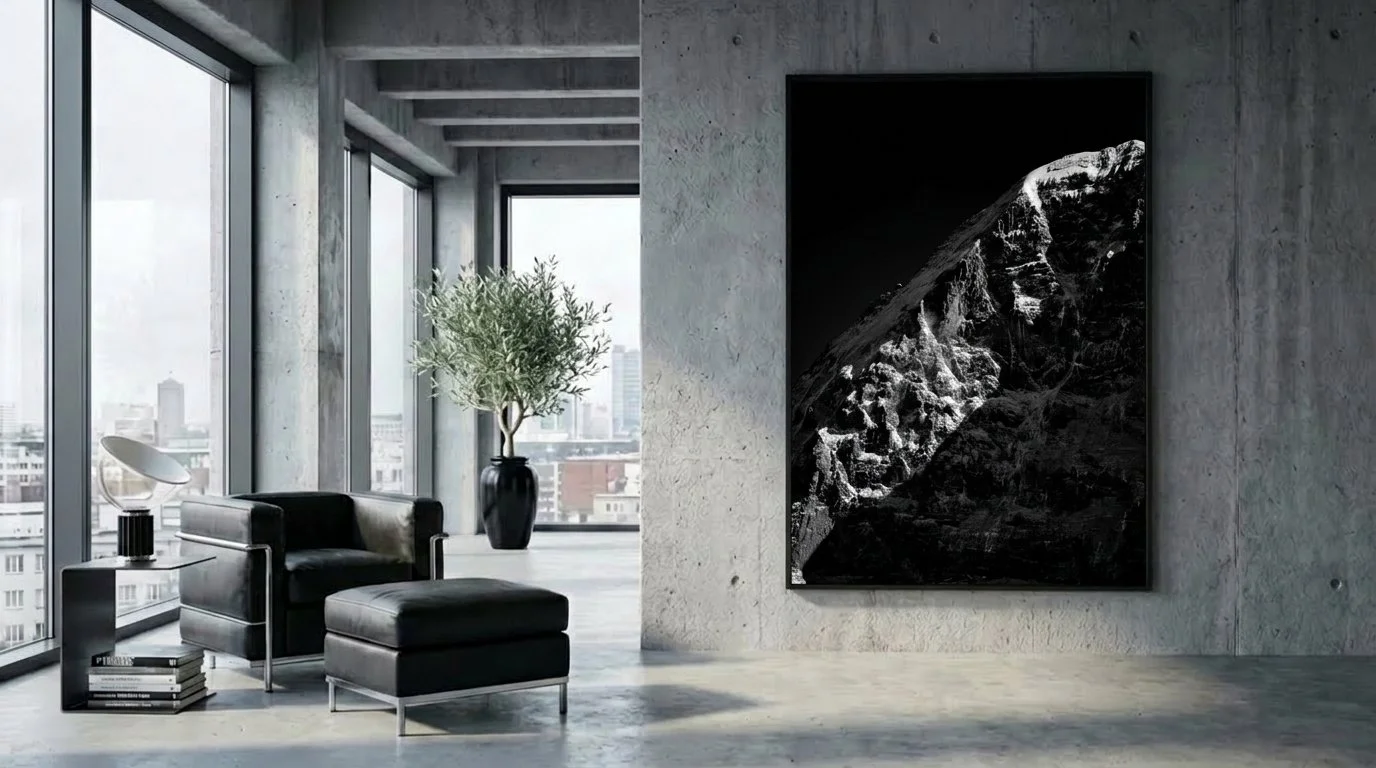
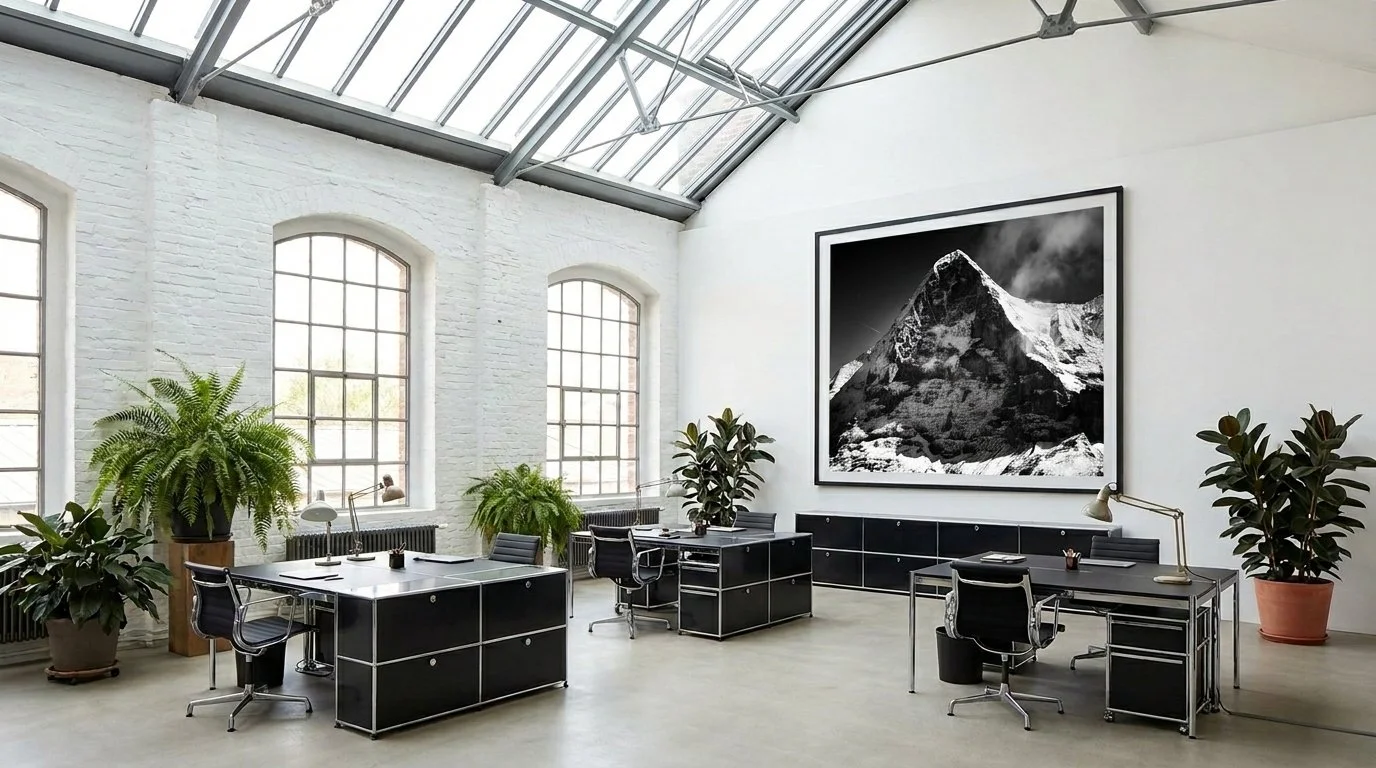
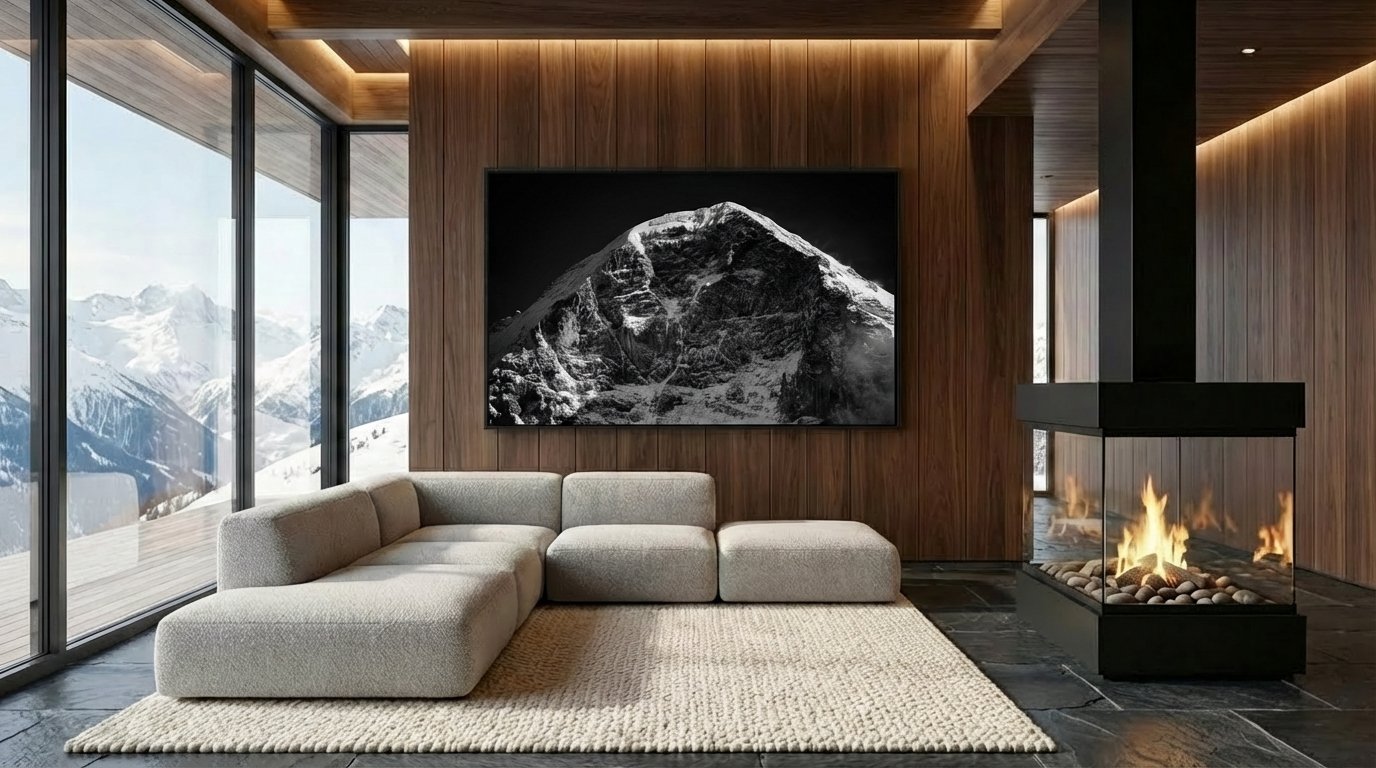
For collectors, an Eiger photograph carries the literature it sits within. To hang the north face on a wall is to hang Harrer's book, Stölzl's film, Hodler's paintings, the Toni Kurz tragedy, the Heckmair ascent, the Jungfrau Railway, the Bernese Oberland tourism century, and the slow withdrawal of the glaciers below the wall, all in the same frame. Few alpine subjects carry as much.
The conversation continues. The wall is still climbed. The wall is still painted. The wall is still photographed. New attempts are made, new technologies developed, new images produced, and each adds another year to the long visible record of the most documented alpine north face in the world.
Questions, briefly answered
-
The Eiger stands at 3'967 metres above sea level. It is the lowest of the famous Bernese Oberland trio with the Mönch (4'107 m) and the Jungfrau (4'158 m), but the most photographed because of its 1'800 metre north face
-
The Eiger sits in the Bernese Alps, in the canton of Bern, Switzerland, above the village of Grindelwald. The classic vantage is Kleine Scheidegg at 2'061 metres, reached by the Wengernalp Railway. Coordinates: 46°34′39″ N, 8°00′19″ E.
-
The Eiger summit was first climbed on 11 August 1858 by the Irish climber Charles Barrington with the Swiss guides Christian Almer and Peter Bohren, by the west flank. The north face was first climbed between 21 and 24 July 1938 by Anderl Heckmair, Ludwig Vörg, Heinrich Harrer, and Fritz Kasparek.
-
The Eiger north face (Nordwand) is approximately 1'800 metres high, one of the largest in the Alps, and was the most famous unclimbed objective in European mountaineering through the 1930s. The Toni Kurz tragedy of 1936 and the successful 1938 ascent gave the wall a literature, a vocabulary (Hinterstoisser Traverse, Death Bivouac, White Spider), and a place in cinema (the 2008 film Nordwand). Heinrich Harrer's 1959 book Die weiße Spinne remains the foundational literary account.
-
Limited edition fine art works of the Eiger by Swiss Mountain Photographer Jürg Kaufmann are available directly through the artist's catalogue at juergkaufmann.com. A work from this peak is installed at the Grace La Margna in St. Moritz.
Inquire about a work from this peak
Pricing, availability, and installation guidance are shared in private correspondence. Each inquiry is answered personally by the artist's atelier.